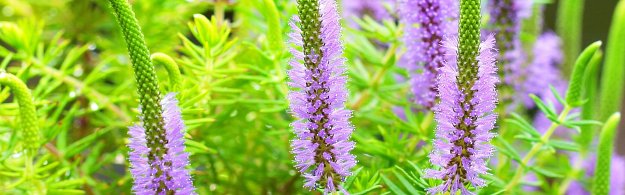
Rare plants
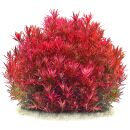
- Also called Rotala "Blood Red Singapore"
- The Rotala rotundifolia form with the richest red
- Forms a striking colour accent
- No high demands
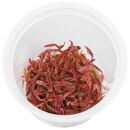
- Unique pink Hygrophila
- Bushy, low growth habit
- Striking colour accent
- New and rarely available in Europe
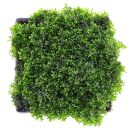
- Forms compact yet delicate cushions
- Attaches itself to the hardscape
- Very popular in aquascaping

- Little known novelty
- Very long, thin culms
- Much finer stems than the Giant hairgrass
- Ideal complement to other Eleocharis
- Not very demanding
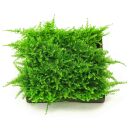
- Very densely ramified, bushy growth
- Soft, delicate texture
- Light green colour
- Attaches well to the substate
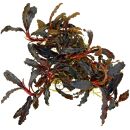
- One of the most beautiful Bucephalandras
- Very dark with a blueish sheen
- Undulate leaf margin
- Young leaves are brownish-red
- Dark red leaf stalks
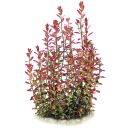
- Rare Rotala from Florida
- Purple-toned leaves and green stems
- Upright growth
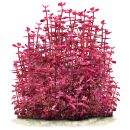
- Spectacular colour form of Salzmann's water hyssop
- Dark red-violet tones
- Relatively slow growth
- No high demands
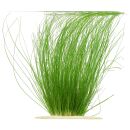
- Exceptional, grass-like Eriocaulon
- Leaves narrower than in "Japan Needle Leaf"
- Forms dense tufts with hair-like foliage
- Rare plant
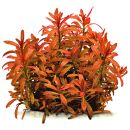
- Also known as "Ammania sp. from Sulawesi"
- Strikingly brown-red leaves with purple tones, green stems
- Upright growth
- Rarely available

- Forms filigree, deeply green cushions
- Wider branches than Riccardia sp. "chamedryfolia"
- Layered structure
- Very recommendable as epiphyte for the hardscape
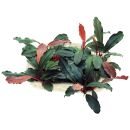
- Attractive, small epiphyte
- Elliptic leaves with wavy margin
- Reddish and dark green tones
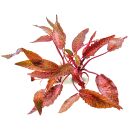
- Leaves with splendid colour pattern
- Flat spreading leaf rosette
- Very good aquarium suitability
- Rare in trade
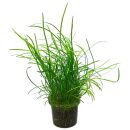
- A very narrow-leaved Sagittaria
- Forms grasslike bushes
- Undemanding
- Has been in cultivation for a long time
- Rarely in the trade
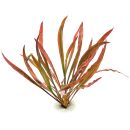
- Beautiful Cryptocoryne form from India
- Brown-red with green midrib
- Decorative plant for the midground
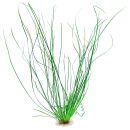
- Grasslike, comparable to Vallisneria gracilis
- Very narrow, flexible leaves
- Dark green coloration
- Also grows as epiphyte
- Undemanding

- Extraordinary pink tones
- Slow growth
- Striking accent in the foreground to midground
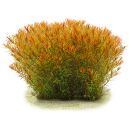
- Also known as Rotala sp. "Gia Lai" / "H'Ra"
- Bushy, overhanging growth
- Narrow, delicate foliage
- Light green, reddish to orange
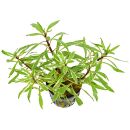
- Large stem plant with stunning white colouration
- Narrow leaves, arranged in a whorl
- Rare in trade
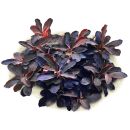
- Compact leaf rosette
- Dark olive, purple and blueish tones
- Well growing
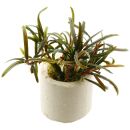
- Also known as Bucephalandra sp. "Rosmarin" and "Rosemary"
- Very narrow, smooth leaves
- Tufted growth
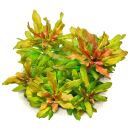
- Unique stem plant, almost rosette-like
- Horizontal growth habit
- Orange-brown hues
- Novelty, not available in trade elsewhere
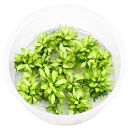
- Yellow-green, very small leaves
- New cultivar, still very rare
- Very compact growth habit
- Narrow leaf shape
- Well suited for nano aquariums

- New variant of Hygrophila pinnatifida
- Also called Hygrophila pinnatifida 'UK'
- More tendency to red coloration
- Deeper lobed leaves
Rare plants for your aquarium
There are now hundreds of aquatic plants known to be suitable for aquariums. However, a considerable number of these species and varieties are hard to come by. Many plants for the aquarium are only rarely or not at all to be found in the assortments of the water plant nurseries, and therefore cannot be bought in the usual aquaristics shop. That such rarities are present in aquaristics at all, often very much depends on the efforts of specially interested aquarists.
In our online shop we offer a rich selection of not only common, but also rare aquarium plants, mostly from our own plantation. In this way we contribute to the variety of plants in aquaristics. Not only collectors and specialists, but also "normal" aquarists and aquascapers get their money's worth with us. The quality of our plants also benefits from their fast dispatch.
Rare aquarium plants are by no means always particularly demanding, there are also several species among them that are very easy to maintain and definitely deserve greater popularity. In addition, the design potential of many rare aquarium plants has not yet been fully explored, and so it is all the more interesting to gain experience with them.
That an aquarium plant is a rarity can have quite different reasons: Often these are novelties, which are still scarcely spread in the hobby and not available everywhere, yet. This applies for example to many Bucephalandra-forms from the island Borneo or the easy to maintain Schismatoglottis prietoi from the Philippines. Some soon turn out to be excellent aquarium plants and will evetually spread rapidly in the scene. This was the case a few years ago, for example, with the New Large Pearl Grass (Micranthemum sp. "Montecarlo-3" = Micranthemum tweediei) and the three-part pennywort (Hydrocotyle cf. tripartita), which are now part of the standard range of European aquarium plant nurseries.
Other plants remain rare, as they can only be reproduced in small numbers or with great effort, such as many Eriocaulon species, though among which, some very undemanding species such as Eriocaulon sp. "Vietnam" can be found. In-vitro culture in specialized laboratories sure is one way to make them more available, but it is not always easy to establish new plant species or varieties in tissue culture. Various stem plants are very splendid, but rare, like Rotala macrandra 'Mini Type 4'.
Even long-known, proven species can become rarities if they are no longer cultivated by the nurseries for various reasons. It can happen quite quickly for them to disappear from aquaristics entirely. For example, the horizontal sword plant, Echinodorus horizontalis, was a widespread aquarium plant until the 1980s, but is now only maintained by a few aquarists. To make matters worse, incorrect trade names are used, so that a completely different Echinodorus is produced with the label "Echinodorus horizontalis" in plant nurseries. As another example, the name Microsorum pteropus 'Philippine' is often used nowadays for Java fern types, which have nothing to do with the very decorative, but hardly available, original 'Philippine'. We attach great importance to correct naming, and besides other rare Microsorum pteropus variants like "Needle leaf" and "Orange Narrow" you can also buy the original Philippines Java Fern from us.