Floating Spikerush
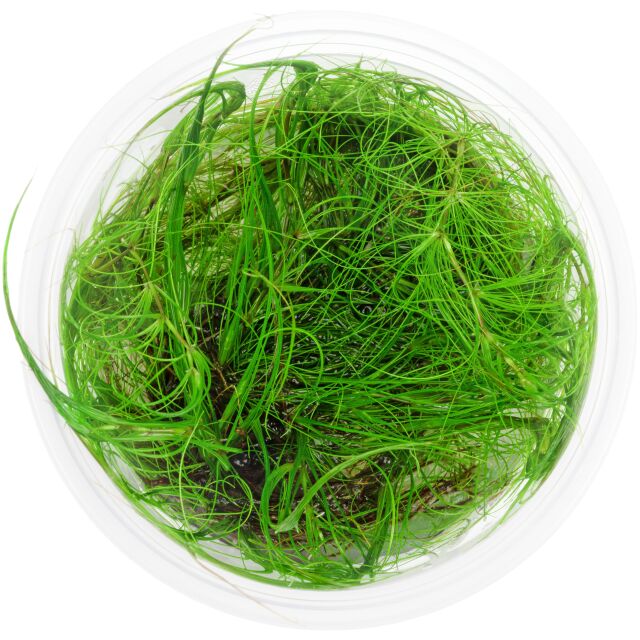
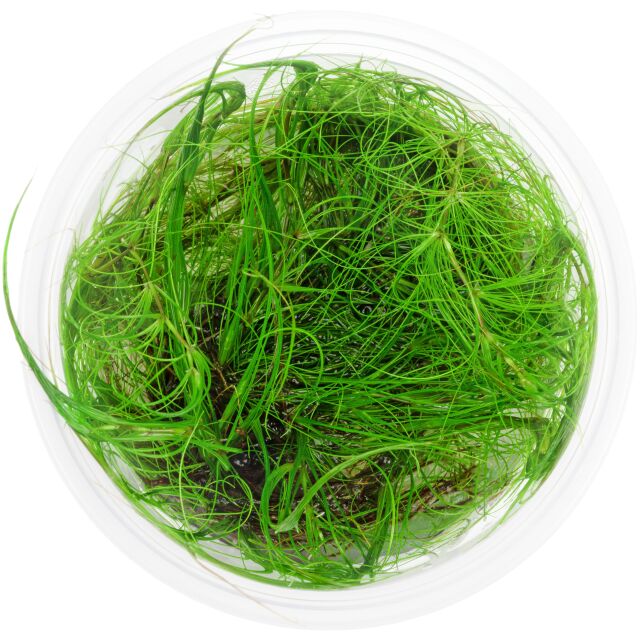
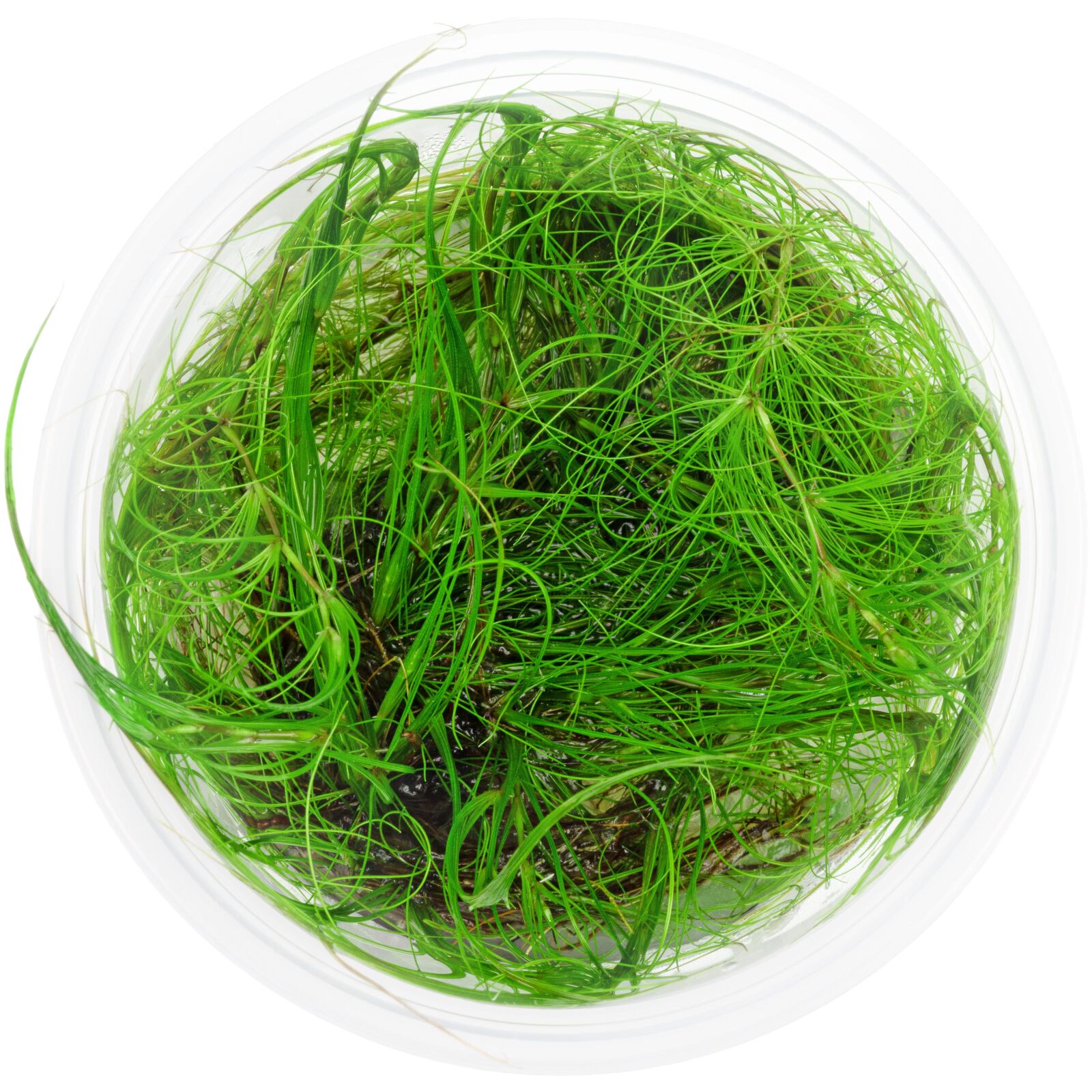
Eleocharis fluctuans
Floating Spikerush
- Extraordinary aquatic plant from South America
- Brownish-red stems with tufts of hair-like culms
- Recommended for aquariums with soft, acidic water
Item question
We’re here for you!
Please enter your question and e-mail and we’ll contact you as soon as possible. It usually takes us up to 24 hours during business days to respond.
Thank you for your question!
Thank you, we’ll get in touch!
Close window
You already sent us a question.
Please wait a few minutes
Description
Eleocharis fluctuans is an elegant, finely structured aquatic plant from tropical South America. It was long known as Egleria fluctuans, but has been assigned to Eleocharis since 2010. It is a floating, surface-growing stem plant that roots in the substrate, with reddish-brown stems and hair-like, delicate, olive-green blades arranged in alternate clusters at the stem nodes. The plant hardly looks like a spike-rush (Eleocharis), but is more reminiscent of Water nymph (Najas) species. However, as a member of the sedge family (Cyperaceae), it is not closely related to them. This unusual grass-like plant occurs in Colombia, Venezuela and northern Brazil in rivers and swamp waters with soft, acidic water. As an aquarium plant, it has so far only been introduced occasionally, but has recently become available commercially as an in vitro plant.
The floating spike-rush is described as a demanding soft-water plant. Similar to Tonina fluviatilis, Syngonanthus and many Eriocaulon species, it can be cultivated successfully with strong lighting, a consistent supply of nutrients, CO2 addition and soft water with a carbonate hardness of up to around 3 and a pH below 6.5. If the KH and pH value are too high, blackening and a halt in growth may occur.
In its natural habitats, the shoots of E. fluctuans form floating masses at the surface, but in the aquarium they can be planted in the substrate, where they will take root. For propagation, as with other stem plants, the upper part of the stem is cut off and replanted. Side shoots grow from the remaining stem, encouraging an attractive bushy appearance. New shoots also develop at the base of the stem. As with Najas species, the stems of E. fluctuans are quite brittle, so care should be taken when handling it in the aquarium.
This extraordinary plant is particularly suitable for the “wild” Nature Aquarium style, with which Eleocharis vivipara also combines well. An attractive, almost chaotic background planting of Eleocharis fluctuans, combined with a well-maintained lawn-like growth in the foreground, can contribute to an excellent, high-contrast aquascape. Other plants from the blackwater regions of South America, such as Tonina fluviatilis and Syngonanthus species, which have the same cultivation requirements, also make a harmonious combination.
General information
Please choose a variant to see more information.
| Item no. |
|
| EAN | |
| Weight | |
| Shipping weight |
Customers ask customers
You have questions about this product? Ask other customer or our support team about this product!