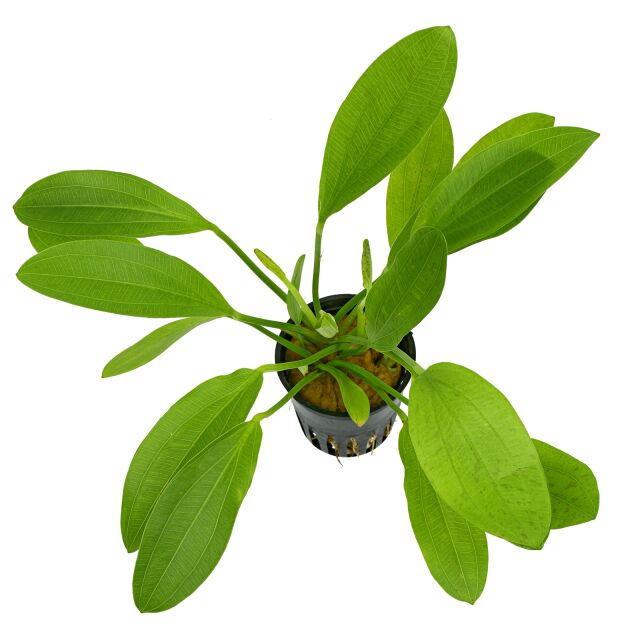
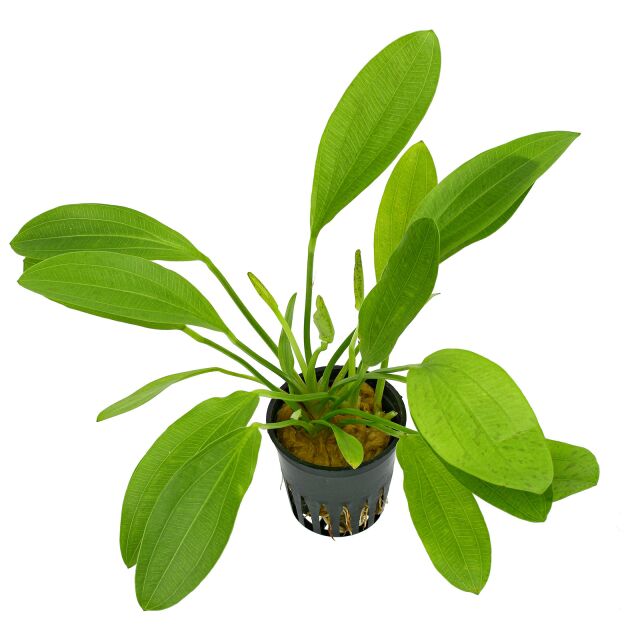
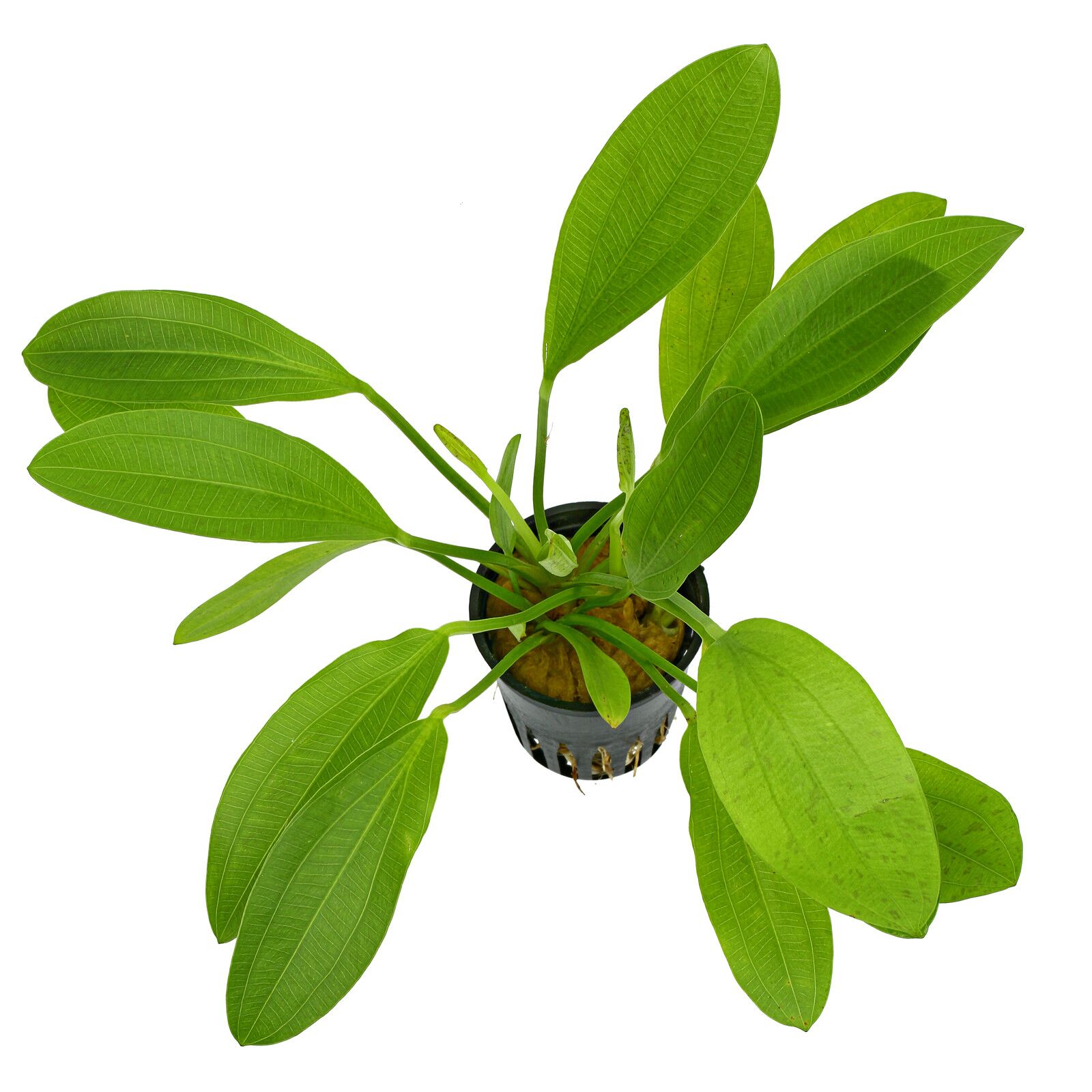
Echinodorus Dschungelstar Nr. 3 'Python'
- Small to medium sized, narrow-leaved swordplant
- Submerged plant mostly 10-20, maximum 40 cm high
- Red brown to olive green, dark red spots
Sign in or Register
Item question
We’re here for you!
Please enter your question and e-mail and we’ll contact you as soon as possible. It usually takes us up to 24 hours during business days to respond.
Thank you for your question!
Thank you, we’ll get in touch!
Close window
You already sent us a question.
Please wait a few minutes
Description
'Python' is a highly recommended, vigorous, relatively small, narrow-leaved Echinodorus cultivar. Like the other cultivars in the 'Dschungelstar' series, it was bred by Julius Hoechstetter (Trostberg, Bavaria) in the early 1990s and introduced to the aquarium trade by Dennerle. It is also sold under the trade name Echinodorus 'Harbii Rosa'. Under moderate lighting and nutrient conditions, this plant typically grows to only about 10–20 cm in height in the aquarium. According to Dennerle, however, it can reach up to 40 cm. The leaves are very narrowly elliptic in shape and, provided the plant receives good lighting, emerge reddish brown with a darker spotted pattern. As they mature, they turn olive green, while the dark red spots that gave rise to the cultivar name 'Python' remain. The longitudinal veins are a lighter green than the rest of the leaf blade.
Echinodorus cultivars are usually sold in their emersed (terrestrial) form. At this stage they generally have broader, greener leaves with longer leaf stalks. It is only after being planted in the aquarium that the attractively coloured submerged leaves develop.
Echinodorus Dschungelstar No. 3 'Python' is undemanding, but like all sword plants it benefits from a nutrient-rich substrate. It grows well under moderate lighting, although stronger light enhances its attractive reddish-brown colouration. The ideal temperature range is about 18 to 28 °C.
This decorative, fairly low-growing sword plant hybrid can be used as a single specimen or in a small, loose group in the foreground or midground, depending on the height of the aquarium. In smaller aquaria it also makes an attractive specimen plant in the background. It provides a striking splash of colour and contrasts beautifully with low-growing, light green carpeting plants, for example.
General information
Please choose a variant to see more information.
| Item no. |
|
| EAN | |
| Weight | |
| Shipping weight |
Customers ask customers
You have questions about this product? Ask other customer or our support team about this product!